
A few years ago, I published an article on my personal hunting blog answering a simple question: What time are turkeys most active?
At the time, it felt like exactly what content was supposed to be. It answered a common question accurately, covered familiar ground, and even looked marginally better than other articles ranking on the first page. There were no glaring errors, no obvious red flags, and no reason to think it wouldn’t perform.
Looking back, it’s a textbook example of content that exists without ever becoming a business asset.
The article was built in isolation. It targeted a highly commoditized question, lived outside of any broader content strategy, and had no real job beyond answering a single query.
It wasn’t designed to build authority, support related content, guide readers deeper into the site, or create long-term value. Once a reader got what they needed, they left, and nothing about the page gave them a reason to stay.
At the time, my main monetization play was display advertising, with some affiliate links mixed in. A handful of articles on that site made over $1,000 from ads and affiliates over their lifetime. This one made a whopping $1.85.
Looking back now, the problem wasn’t primarily how the article was written. There were plenty of improvements to be made, but the core issue is obvious in hindsight.
It was the topic itself.
That question is highly commoditized, purely informational, and disconnected from any larger content strategy. Even a perfectly written version would have struggled to become an asset.
The article was never positioned to build authority, support related content, or contribute to a broader business goal. It could earn a click, but nothing more.
That’s the trap many outdoor brands fall into.
This kind of content doesn’t fail loudly. It doesn’t get penalized or deindexed. It simply fades into the background, generating occasional clicks without compounding trust, engagement, or meaningful results.
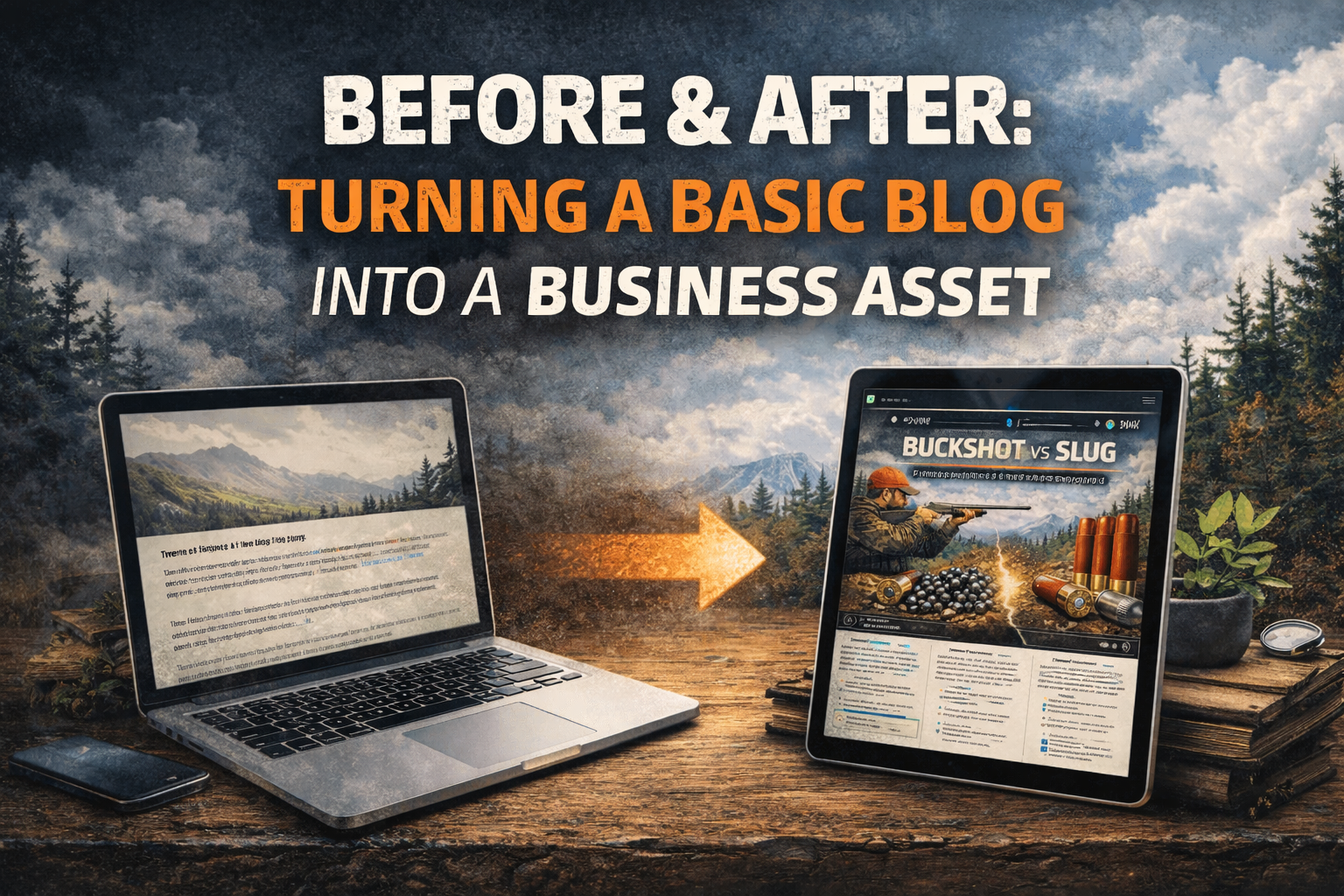
I’ll use that post as a “before” example, not to critique the writing, but to show how topic selection, structure, and intent determine whether content compounds or quietly fades.
I’ll then walk through how I approach content today: choosing topics with a job to do, connecting articles into meaningful clusters, prioritizing real-world experience, and improving usability through scannable formatting, original visuals, and audio versions for readers who prefer to listen.
The goal isn’t to rewrite an old article. It’s to show how changing the way content is planned turns a blog post into a business asset.
The Before: Standalone Content With No Strategic Role
Before getting into screenshots, it’s important to understand what this article was designed to do at the time, and what it wasn’t.
This wasn’t low-effort content. It was accurate, readable, and written with good intentions. It answered a real question people search for every year. But beyond that single interaction, it had no role inside a larger system.
The article existed on its own.
It wasn’t part of a topic cluster.
It didn’t support any higher-value pages.
It wasn’t meant to guide readers deeper into the site.
And it wasn’t aligned with any specific business outcome.
Once a reader got their answer, the experience was effectively over.
More importantly, the article didn’t add anything new to the conversation.
It was essentially a summary of what already existed on the first page of the SERP; an aggregation of common advice pulled from other ranking articles and widely available sources.
There were no original insights, no firsthand observations, and no perspective that made it meaningfully different from the pages it was competing against. Nowadays, that need is filled by AI in a matter of milliseconds.
The only way we beat this kind of content is to bring real experience into the writing. I went into detail about that in my other article here: AI Can Write, But It Can’t Hunt: Why Outdoor Brands Need Real Voices
That’s an easy trap to fall into, especially with highly commoditized questions. When everyone is answering the same prompt in roughly the same way, even well-written content becomes interchangeable.
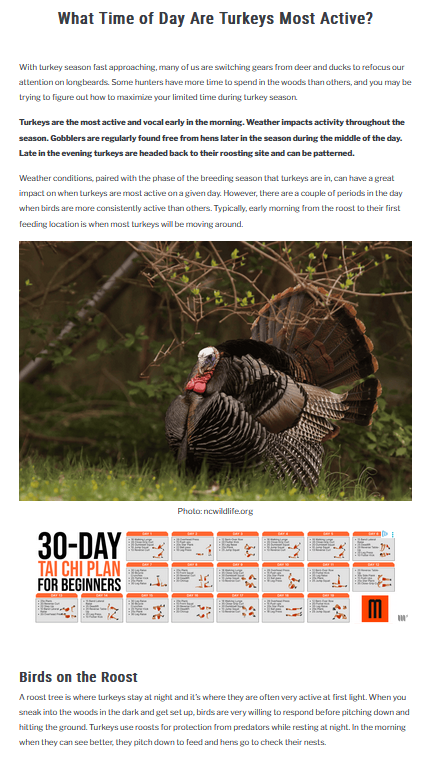
Structurally, that showed up in a few predictable ways:
- Long walls of text with no clear prioritization
- No scannability beyond basic headings
- Generic stock images used as filler, not proof
- A single internal link added loosely, without intent
- Display ads as the primary monetization strategy
Nothing about the page encouraged exploration, comparison, or follow-up reading. There was no reason for a reader to bookmark it, share it, or come back later. And there was no reason for search engines to give it any value.
This is what most “good” blog content looks like before strategy enters the picture.
Readable. Accurate. Harmless. But strategically empty.
And content like this doesn’t collapse overnight. It just slowly disappears into the background, taking any chance at compounding value with it.
Why This Kind of Content Fades Quietly
The most dangerous thing about standalone, commoditized content is that it doesn’t fail in an obvious way.
There’s no penalty or sudden drop. The article may still earn impressions and the occasional click. But it never sends the signals that actually matter.
Readers land on the page, get a surface-level answer, and leave.
They don’t scroll far.
They don’t explore related content.
They don’t come back.
To a search engine, that behavior means the page is interchangeable.
If you want to see more about search engine signals and how you can improve them, check out this article: Why Most Outdoor Brand Content Fails to Rank [And How to Fix It]
When dozens of articles answer the same question in roughly the same way, correctness isn’t the differentiator, engagement is. Pages that hold attention, answer follow-up questions, and demonstrate real-world understanding perform better over time because readers treat them differently.
Standalone content like this never gets that chance.
It doesn’t compound authority.
It doesn’t build internal relevance.
And it slowly drifts downward as better-structured or more useful content replaces it.
This is how content dies quietly. Not because it’s wrong, but because it’s forgettable.
The After: Designing Content With a Job
The biggest shift in how I approach content today is simple: every article has a job.
That job isn’t just to answer a question. It’s to support a broader goal: building authority, guiding readers deeper into the site, or supporting a product, category, or decision a real person is trying to make.
That starts with topic selection.
Instead of chasing isolated, informational queries, I look for topics that fit into a larger system. Questions that naturally connect to gear, tactics, seasonal planning, or buyer decisions. Topics that make sense as part of a cluster, not as a one-off post.
From there, structure matters just as much as substance.
Articles are built to be scannable, not skimmed once and forgotten. Shorter paragraphs, clear subheads, and bolded key ideas make it easy for experienced readers to find what they’re looking for quickly, and just as easy to keep reading when something catches their attention.
Experience is the differentiator.
Real-world use, tradeoffs, failures, and context are what turn content into something worth engaging with. These are the details that don’t show up in generic summaries, but they’re the ones readers recognize immediately and search engines learn to value over time.
Finally, usability isn’t an afterthought.
Original visuals, intentional internal links, and even audio versions for readers who prefer to listen all work together to keep people on the page longer and make the content easier to consume in different contexts.
None of this is about publishing more.It’s about making each article do more.
That’s the difference between a blog post and a business asset.
What an Asset-Driven Article Looks Like in Practice
To make this concrete, here’s an example of an article built with a clear job from the start.
Instead of answering a generic informational question, the article is centered around a real decision readers actively face: choosing between buckshot and slugs based on how they actually plan to use a shotgun.
The intent isn’t abstract. It’s situational, hunting versus self-defense, and that distinction shapes everything that follows.
Before any body content, the article offers an audio version for readers who prefer to listen rather than read. This isn’t about novelty. It’s about removing friction and meeting readers where they are, whether they’re at a desk, in the truck, or multitasking.
Usability like this keeps people engaged longer and signals that the content was built intentionally, not just a blog that is published every Friday.
Early in the article, readers are given clear, use-case-specific answers through short TL;DR sections. Each one delivers the what, the why, and the practical takeaway for that scenario (a box of ammo in this case). This respects the reader’s time while still setting the stage for deeper explanation.
Experienced readers can get what they need quickly, while others can continue reading for nuance and context.
Then, while we are talking about shotgun use cases, we made sure to put a purpose driven internal link that strongly relates to the readers headspace at this point in the article, pointing them toward closely related topics they’re likely to care about next.
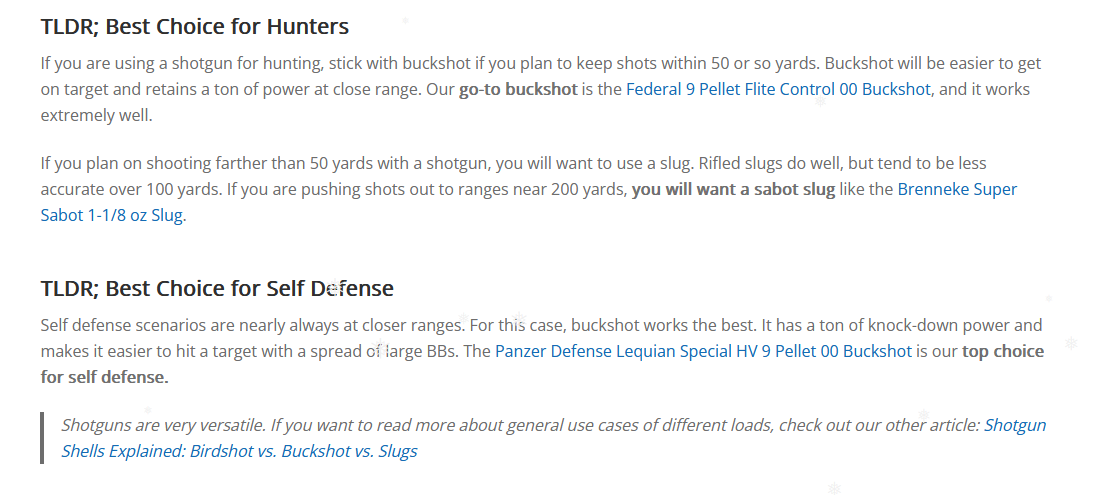
This turns the page into part of a larger system rather than a dead end.
Visuals play a supporting role here as well. Instead of relying on generic stock imagery, the article combines purpose-built visuals with real product photography. You can also see that we created a custom ballistics chart to drive a point home about how slugs stood up to typical centerfire cartridges.

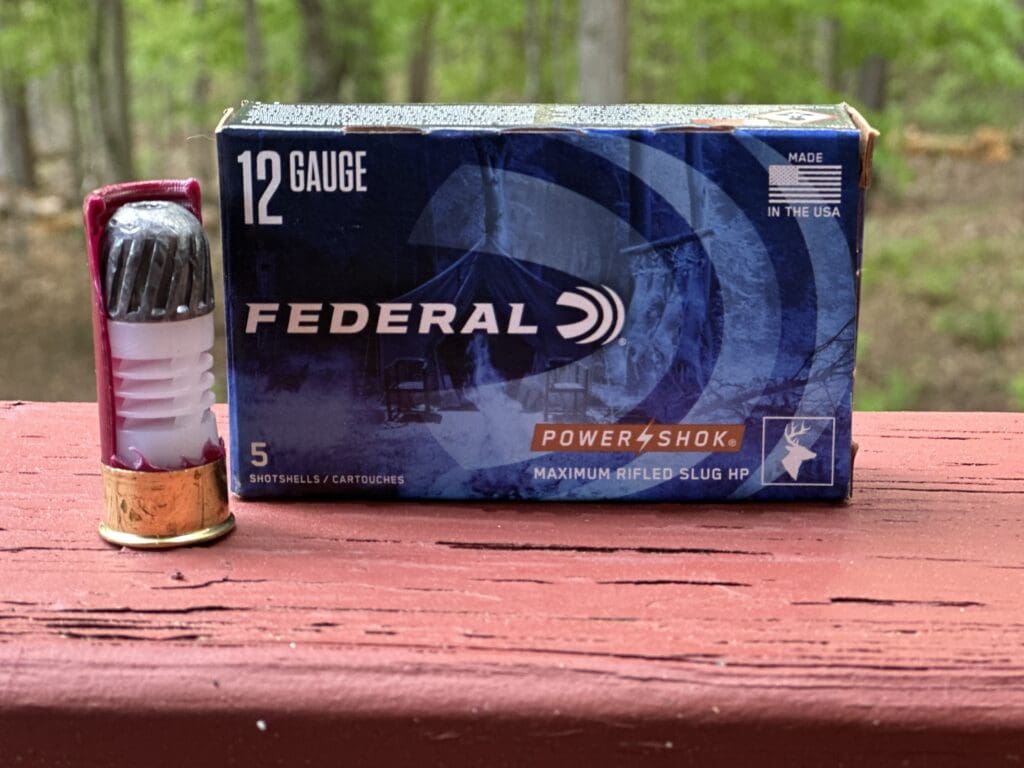
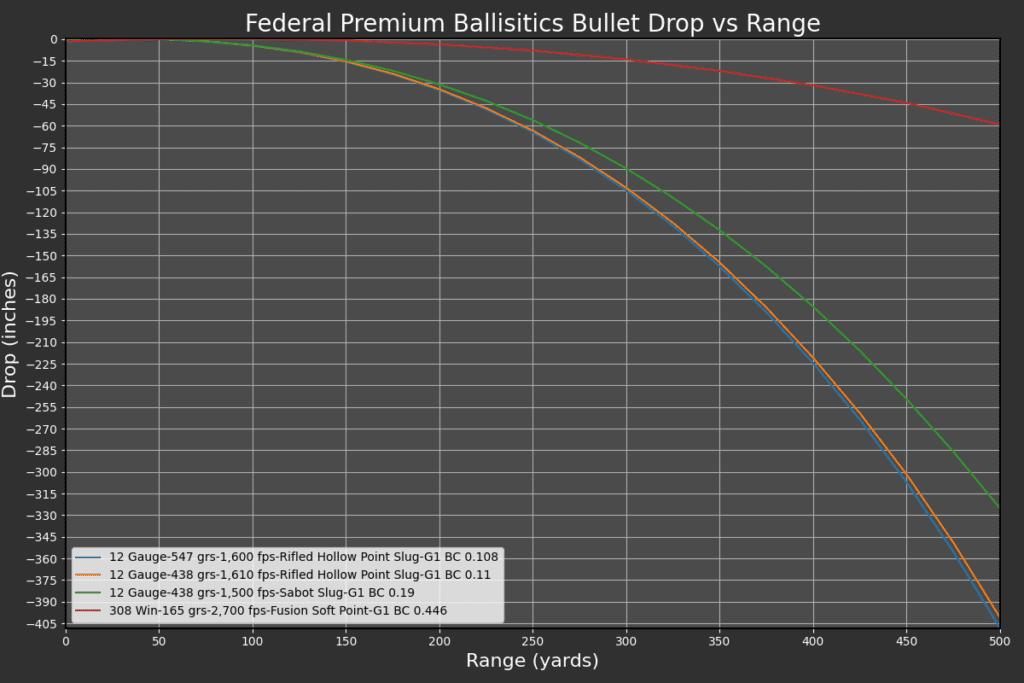
None of these elements exist to decorate the page. Together, they help the article do its job: guide readers toward a decision, reinforce trust through clarity and experience, and connect that decision to the rest of the content ecosystem.
That’s what separates an asset-driven article from a standalone blog post. It’s not just informative, it’s intentional.
Here’s a tighter, cleaner conclusion that keeps the core message and trims any excess:
The Difference Isn’t Better Writing: It’s Better Intent
The real takeaway from this before-and-after isn’t about formatting or SEO tactics. It’s about intent.
The original article didn’t fail because it was inaccurate or poorly written. It failed because it wasn’t designed to do anything beyond answering a single question. Once the click happened, the value stopped.
Asset-driven content works differently.
It starts with topics tied to real decisions. It’s structured to respect how experienced readers consume information. It brings firsthand context into the conversation and connects naturally to other relevant content. Every element exists to support a purpose, not just fill space.
That doesn’t happen by accident. It requires planning before the first word is written.
For outdoor brands, publishing more content rarely fixes underperformance. Publishing with intent does. When articles are designed to work together, build trust, and guide readers forward, content stops fading quietly and starts compounding over time.
That’s the difference between a simple blog post and a business asset.
If you’re rethinking how your content is planned and want a second set of eyes on your approach, we’re always happy to talk.